
Nitro or Poly? What Your Guitar's Finish Means for Your Strap
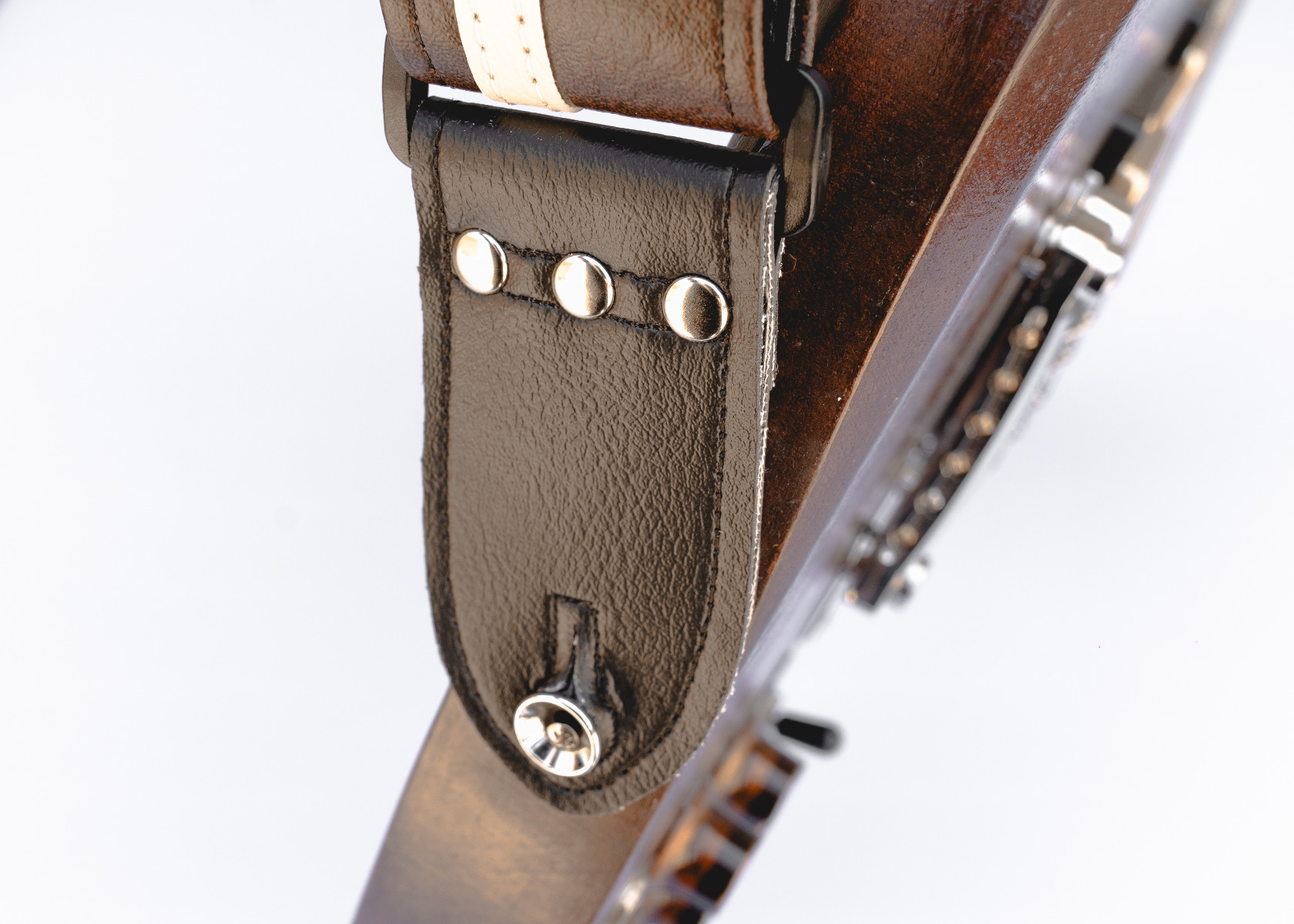
It’s one of the questions we hear the most: “will a vinyl guitar strap mess up my guitar’s finish?” Totally fair thing to worry about — nobody wants to trade a scratched shoulder for a scratched guitar. Short version: it depends entirely on one thing — your guitar’s finish. Check which one you’ve got below, then read on for the why.
✓ Poly / Polyurethane Finish
Most modern, factory-made guitars. You’re totally fine — any strap material, no precautions needed.
⚠ Nitro-Cellulose Lacquer Finish
Vintage instruments, custom shop builds, some higher-end Gibsons. Worth a few easy precautions — jump straight to the care guide.
The Short Answer: Almost Certainly Not
For the vast majority of guitars out there — anything with a modern factory finish — a vinyl strap is completely safe. We’ve made and sold thousands of straps over the last 25+ years, and we’ve been using our own Couch straps on our own guitars just as long. Our Rickenbacker 330 and ’90s American Fender Telecaster have both been wearing Couch straps since 1999 and are in great shape. Honestly, the only finish damage we’ve ever caused is to the necks — from playing them so much. That’s kind of the point, right? Rock.
Why Most Guitars Are Totally Safe
Today, most factory-made guitars — whether that’s a new Fender, a mid-tier Gibson, a PRS, or basically anything off the wall at your local shop — are finished with some variety of polyurethane (“poly”). Poly finishes cure hard, seal the wood completely, and shrug off everyday contact with straps, cases, sweat, and stands. It’s a tough, modern, plastic-like finish, and it’s genuinely hard to damage with a strap — vinyl, leather, or otherwise.
If your guitar was made in the last few decades and you’re not sure, it’s very likely poly. You can usually tell by feel: poly finishes feel thick, glassy, and perfectly smooth and uniform, almost like a plastic shell over the wood.

Photo: Jeremy Allouche / Unsplash
The Exception: Nitro-Cellulose Lacquer
Here’s where it actually gets interesting. Some vintage guitars, small custom shop builds, and higher-end Gibson models (think Custom Shop Les Pauls and reissues) are finished in nitro-cellulose lacquer instead of poly — the old-school finish almost every guitar used before the 1960s. Nitro looks and feels incredible — thin, warm, and it ages beautifully — but it’s genuinely more delicate. It stays chemically “soft” for the guitar’s entire life, which is part of why vintage nitro guitars develop that sought-after checking and wear pattern over decades.
That softness means nitro can be sensitive to a lot of everyday things touching it for extended periods — not just straps, but sweat, cologne, alcohol, rubber guitar stands, and certain vinyl or nylon materials too. According to Gibson.com and other builders who work in nitro, this is a known, well-documented characteristic of the finish itself — it’s not really about any one material being “bad,” it’s that nitro reacts to sustained contact with almost anything.
Quick Care Guide
Know Your Finish First
Poly (most modern guitars): don’t worry, any strap material is fine. Nitro lacquer (vintage instruments, custom shop, some higher-end Gibsons): take the extra steps below.
If You Have a Nitro Finish
- Store it in the case, not on a wall hanger or guitar stand, especially long-term. Rubber and vinyl stand yokes are actually a more common cause of nitro finish reactions than straps.
- Wipe down contact points after a sweaty gig or practice session — sweat is more likely to affect nitro over time than the strap material itself.
- Keep cologne, perfume, and alcohol away from the finish — these are actually more aggressive toward nitro than most strap materials.
- Don’t leave any strap — ours or anyone else’s, vinyl or leather — buckled on and pressed against the same spot for extended storage periods. A few hours on stage is nothing; months in a closet with the strap cinched tight against the back is what causes issues.
If You Have a Poly Finish (Most Players)
Play your guitar. That’s it. Rock a Couch strap, don’t think twice about it.

Bottom Line
If you’re playing a normal, modern guitar — which is most of you — a Couch vinyl strap is not going to hurt your finish. We’d know: we’ve been strapping our own guitars this way since 1999. If you’re lucky enough to own a nitro-finished vintage piece or custom shop build, just treat it like the delicate, decades-aging instrument it is — case it up when you’re not playing, keep chemicals away from it, and don’t leave any strap clamped against it for months at a time. Know your guitar, and rock accordingly.
Lead The Way. Rock a Couch Guitar Strap.